
Asbestos Shed & Garage Removal Dandenong
Old backyard sheds and detached garages built between the 1950s and 1980s are one of the most common asbestos sources on Dandenong properties — and unlike a fence or a roof, they’re often entire structures made of asbestos cement, not just a section of sheeting. if both need doing, we can quote the fence removal in the same visit and save you a second set-up cost. Removing them properly means dismantling the whole thing safely, decontaminating the slab underneath, and disposing of everything legally. We do the lot on one job — a licensed removal, a clean slab, and a site ready for whatever you’re building next.
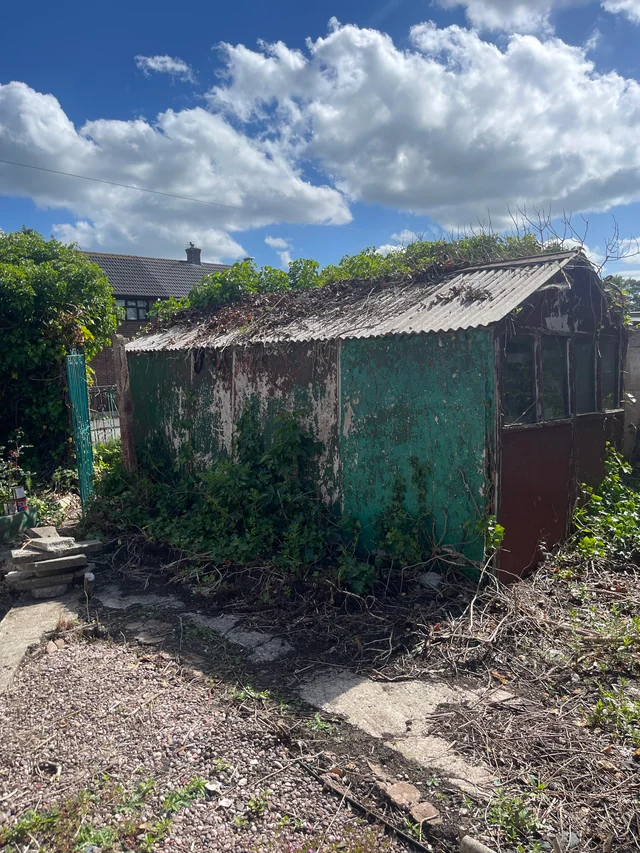
Is your shed or garage made of asbestos?
The structures to watch for
If your shed or garage was built between about 1950 and the mid-1980s, there’s a real chance the entire structure is asbestos cement. Whole-of-structure asbestos was common on:
- Backyard sheds — corrugated or flat cement sheet walls and roof, often on a small slab
- Detached garages — cement sheet walls, corrugated cement roofing, sometimes with cement sheet under the eaves
- Carports and outdoor lean-tos — cement sheet roofing, sometimes wall panels
- Outdoor toilets and laundries — small cement-sheet outbuildings, common on older Dandenong properties
Grey or cream corrugated or flat cement sheet, fibrous texture, a sharp click when tapped. If you’re not sure what you’re looking at, our guide on how to tell if something is asbestos covers the signs. Post-1990 sheds don’t contain asbestos — they’ll be Colorbond or modern fibre cement. Anything older than that needs testing before it comes down. We can sample and lab-test before quoting.
Why sheds and garages are different from fences and roofs
A fence or a roof is a section of asbestos sheeting attached to a non-asbestos structure. A whole shed or garage is asbestos on every surface — walls, roof, sometimes eaves. That changes the job: it’s not stripping sheets off a frame, it’s carefully dismantling a whole structure while keeping the sheets intact, then dealing with what’s underneath. The slab, the framing, any fixings — all of it needs handling as potentially contaminated waste until decontamination is done.
Do you need a licensed removalist for a shed or garage?
Why almost every shed exceeds the DIY limit
Under Victorian law, an unlicensed person can only remove non-friable asbestos if it’s 10 square metres or less and takes under one hour of removal work in any seven-day period. A typical 3×3m backyard shed has around 30m² of asbestos surface once you count walls and roof. A single garage is often 60–100m². Both are well past the DIY limit — a WorkSafe Victoria Class B licence is legally required.— or Class A if the material has become friable through damage or weathering. The full rules are in our guide to removing asbestos yourself in Victoria.What the compliance code requires
For a licensed shed or garage removal: a written removal control plan; WorkSafe Victoria notification (at least 24 hours ahead for jobs under 10m², 5 days ahead for larger); PPE and respirators for all workers; the area isolated and signed; sheets removed intact where possible and wetted down to suppress fibres; double-bagged and labelled waste; disposal at an EPA-licensed facility; and a clearance inspection on request. We hold a CLASS A licence and follow the full compliance code on every removal.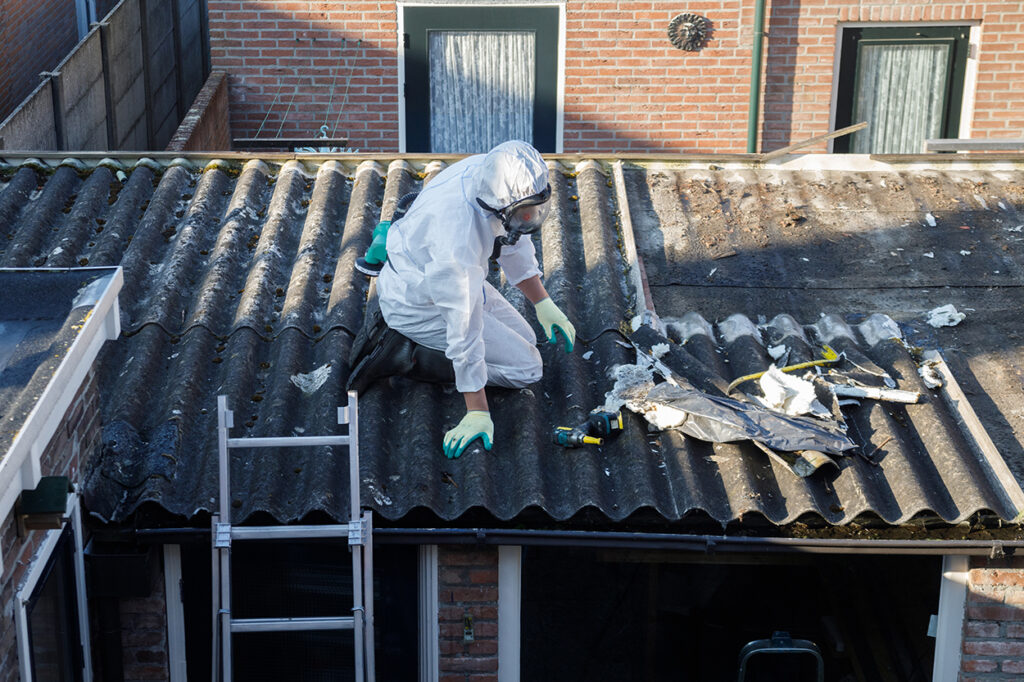

How much does asbestos shed or garage removal cost in Dandenong?
Typical price ranges
In Victoria in 2026, licensed asbestos shed and garage removal typically runs $45–$125 per square metre of asbestos-containing material, with most residential jobs landing:- Small backyard shed (~3×3m): $1,500–$3,000
- Medium shed or single garage: $2,500–$5,000
- Larger double garage or workshop: $4,000–$8,000
What changes the price
Five factors: size (bigger structures are cheaper per m²); condition (damaged or weathered sheeting needs more care to remove intact); access (narrow side gates, no vehicle access and neighbouring buildings all add time — sheds tucked behind houses are the hardest); whether the slab stays or goes (leaving the slab is cheaper than breaking it up); and disposal volume (a whole structure is more waste tonnage than a fence line). We give a fixed on-site quote covering all of it.For how shed and garage prices compare to fences, roofs and cladding, see our asbestos removal cost guide.How We Remove Your Asbestos Fence
Test & Quote
We confirm whether the fence contains asbestos, arrange sampling if required, measure the full fence run and provide a fixed-price quote before work begins.
Notify & Set Up
Where legally required, we notify WorkSafe before starting. We then establish the work area and exclusion zone so the removal can be completed in a controlled manner.
Remove the Fence Safely
Fence sheets are kept damp and removed whole wherever possible rather than being snapped or broken. The material is then securely wrapped, double-bagged where appropriate and sealed as asbestos waste.
Dispose & Clean Up
The sealed asbestos waste is transported to a facility legally authorised to receive it. We then clean the work area and the ground line where the old fence was located.
Replace the Fence
If requested, we can organise or complete the replacement fence as part of the same project so the property is not left with an open boundary after removal.
The step most people miss — the slab underneath
Here’s what turns a shed removal from a straightforward job into a proper one. After the asbestos structure is dismantled, the concrete slab underneath is potentially contaminated — from decades of fibres shedding onto it, from the fixings that held the walls, and from any breakage during removal. It has to be either decontaminated in place (cleaned to the compliance code’s standard) or broken up and disposed of as contaminated waste.
Which one depends on what you’re planning: if you’re building over the slab, decontamination is usually enough. If you want the slab gone entirely for a new build or landscaping, it comes out with the rest as asbestos-affected concrete. Either way, walking away with an “as-is” slab after removing an asbestos shed isn’t a compliant job. We handle the slab as part of the quote so you’re not left with a hidden problem.
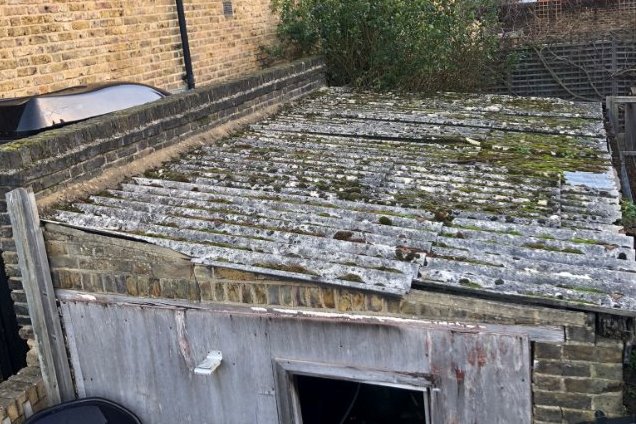
Asbestos shed and garage removal across Greater Dandenong
We remove asbestos sheds, garages, carports and outbuildings across Dandenong and the surrounding south-east, including Springvale, Noble Park, Keysborough, Dandenong South, Dandenong North, Doveton, Hallam and Endeavour Hills — suburbs with the highest concentrations of pre-1985 backyard structures in Melbourne’s south-east.
Get a FREE Asbestos Shed Removal Quote from US
Send us photos of the structure or book an on-site assessment. We’ll confirm whether it’s asbestos, walk you through the removal, tell you what to do about the slab, and give you a fixed price — one number covering the removal, the slab decision, disposal and clearance if you want it.
FAQ
How do I know if my shed or garage is asbestos?
If it’s grey or cream corrugated or flat cement sheet and was built between the 1950s and mid-1980s, it may be asbestos cement. Post-1990 sheds are Colorbond or safe fibre cement. Only a NATA-accredited lab test on a sample confirms it — we can arrange that before quoting.
Do I need a licensed removalist for a small backyard shed?
Almost always yes. Even a small 3×3m shed has around 30m² of asbestos surface once you count walls and roof — well past the 10m² DIY limit. A Class B licensed removalist is legally required.
How much does asbestos shed or garage removal cost in Dandenong?
Small sheds typically $1,500–$3,000, single garages $2,500–$5,000, larger double garages $4,000–$8,000. Add $60–$180 per m² if the slab is being broken up as well. We give a fixed on-site quote.
What happens to the concrete slab?
Either decontaminated in place and left intact, or broken up and removed as asbestos-affected concrete — depending on what you’re planning to do with the site. We handle both as part of the same job.
How long does the job take?
A typical small shed removal is a one-day job. A single garage is usually 1–2 days. Larger structures or jobs including slab removal can run 2–4 days depending on size and access.