
Asbestos Wall & Cladding Removal Dandenong
Asbestos cement sheeting was used on the walls of most Dandenong homes built before 1990 — as external cladding on the outside, and as wall lining inside bathrooms, laundries and kitchens. It’s usually harmless while it’s intact, but the moment a renovation cuts, drills or sands it, the fibres go airborne. We remove asbestos wall sheeting and cladding safely, whether it’s the outside of the house or a bathroom you’re about to renovate, and dispose of it legally with clearance on completion.
Where asbestos cladding and wall sheeting turns up
External cladding
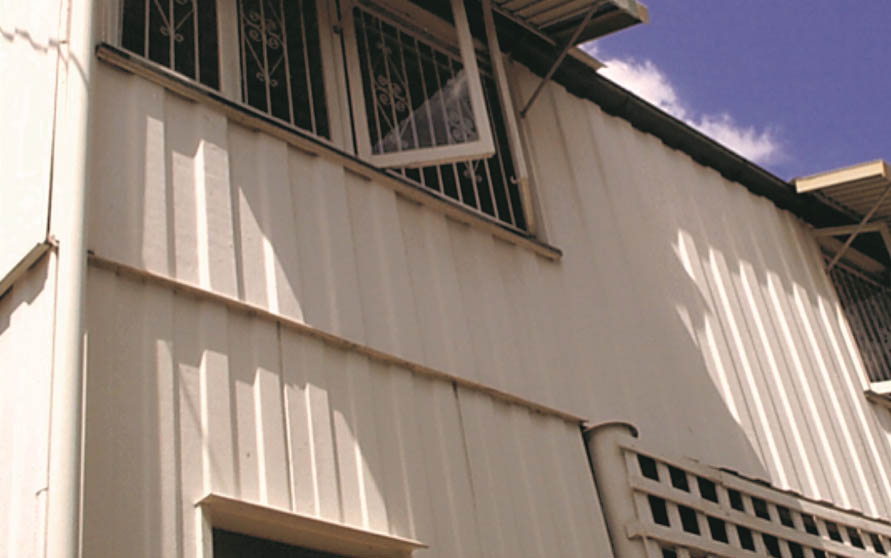
Fibro — flat asbestos cement sheeting — was one of the most common external wall materials in post-war and mid-century Australian homes. Across the Dandenong, Narre Warren and Berwick corridor, fibro-clad homes from the 1960s and 70s are still widespread. It’s on external walls, around verandahs, and under the eaves and soffits. If your home is timber-framed and pre-1990, there’s a strong chance the cladding or the eaves contain asbestos.
Internal wall sheeting — bathrooms, laundries and kitchens
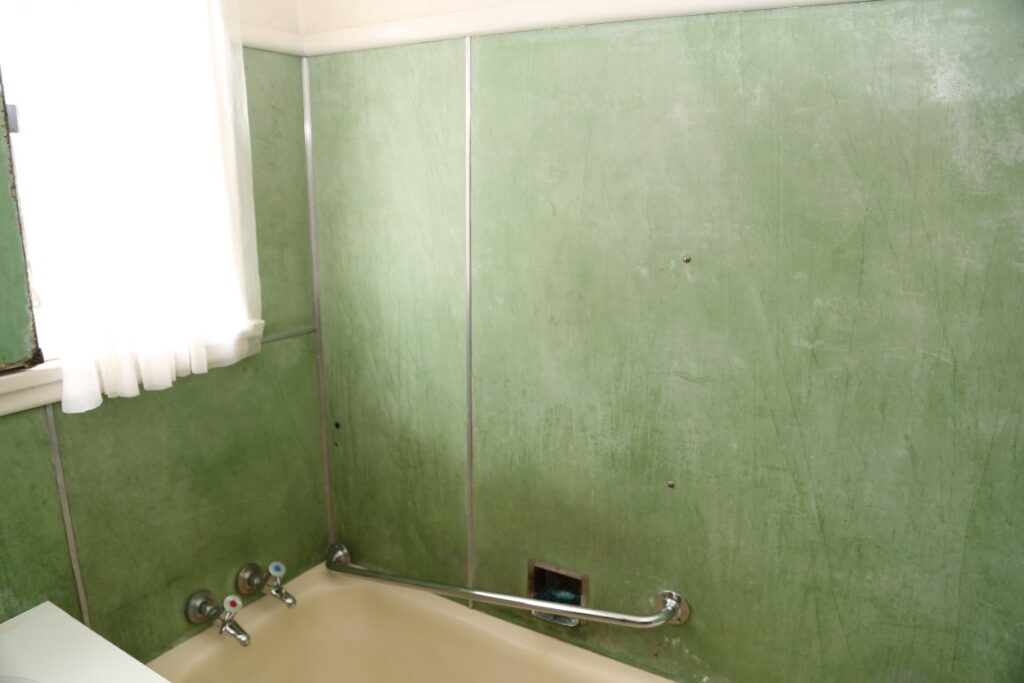
Inside the house, asbestos sheeting was used specifically in the wet areas — bathrooms, laundries and kitchens — because it resisted fire and moisture. One material to know is Tilux: a decorative asbestos wall board, often in pastel colours or patterns, used to tile over or left as a finished surface in bathrooms. If your pre-1990 bathroom has a smooth patterned wall panel behind the tiles, it may be Tilux. This is exactly the material a bathroom renovation disturbs — which is why testing before you start any wet-area reno is the safe move.
Do you need a licensed removalist for wall cladding?
When it exceeds the DIY limit
Victorian law allows an unlicensed person to remove non-friable asbestos only if it’s 10 square metres or less and takes under one hour in any seven-day period. A single bathroom’s wall sheeting can sit near that line; a whole external wall or a full house’s cladding is well past it. Most real cladding jobs — and any external re-clad — legally require a Class B licensed removalist (Class A if the material has become friable through fire, damage or heavy weathering).
Why cladding removal needs care
Wall sheeting is bonded (non-friable) and safe while intact — but removing it means unscrewing or prising off sheets that are often screwed, nailed and sometimes painted or tiled over. Done wrong, that breaks the sheets and releases fibres. Under the compliance code we remove sheets intact where possible, wet them down to suppress fibres, isolate the area, and — for internal work — seal the room off so the rest of the house stays clean. We hold a Class A licence and follow the full code.

How much does asbestos cladding removal cost in Dandenong?
Typical price ranges
In Victoria in 2026, licensed asbestos wall and cladding removal typically runs:- External cladding: around $45–$75 per square metre
- Internal wall sheeting (bathroom/laundry/kitchen): from around $50/m², with most single-room jobs starting near a $950–$1,500 minimum
- Whole-house internal cladding (typical 3-bedroom): roughly $3,000–$6,000, often including air monitoring
- Eaves and soffits: usually charged per linear metre; a standard 3-bedroom home’s eaves often start around $1,500
What changes the price
Access and complexity drive cladding jobs more than raw area. The factors: internal vs external (internal needs the room sealed off and often air monitoring); height (two-storey or high eaves need scaffolding, adding $500–$2,000); whether it’s tiled or painted over (Tilux and tiled sheeting take longer to remove intact); how it’s fixed (screwed, nailed, glued); and what happens to the wall after (re-cladding or re-lining is a separate cost). We quote fixed and on-site so the number covers the real job.The full DIY rules are in our guide to removing asbestos yourself in Victoria.Renovating a pre-1990 bathroom or wall? Test first
This is where most accidental asbestos exposure in homes happens. Someone starts a bathroom renovation, pulls tiles off a wall, and the board behind is Tilux — asbestos. Or they re-clad an external wall and cut into fibro with a power saw. The material was safe while it was intact; the renovation is what makes it dangerous, because cutting, drilling, sanding and demolishing all release fibres into the air.
If your home predates 1990 and you’re planning any work that disturbs a wall — internal or external — get the material tested before the first tool touches it. If you’re not sure what you’re looking at, our guide on how to tell if something is asbestos covers the signs. A NATA-accredited lab test on a small sample takes a few days and costs a fraction of what it costs to decontaminate a house after asbestos has been cut into unprotected. We can test before you start, and remove it safely if it’s confirmed.
How the Cladding Removal Works
Testing & Assessment
We confirm whether the cladding contains asbestos, arrange laboratory testing if needed, measure the affected area and provide a fixed-price quote before removal begins.
Plan & Notify
We prepare the required asbestos removal control plan. Where the size or type of work requires it, WorkSafe Victoria is notified before the job starts.
Isolate the Work Area
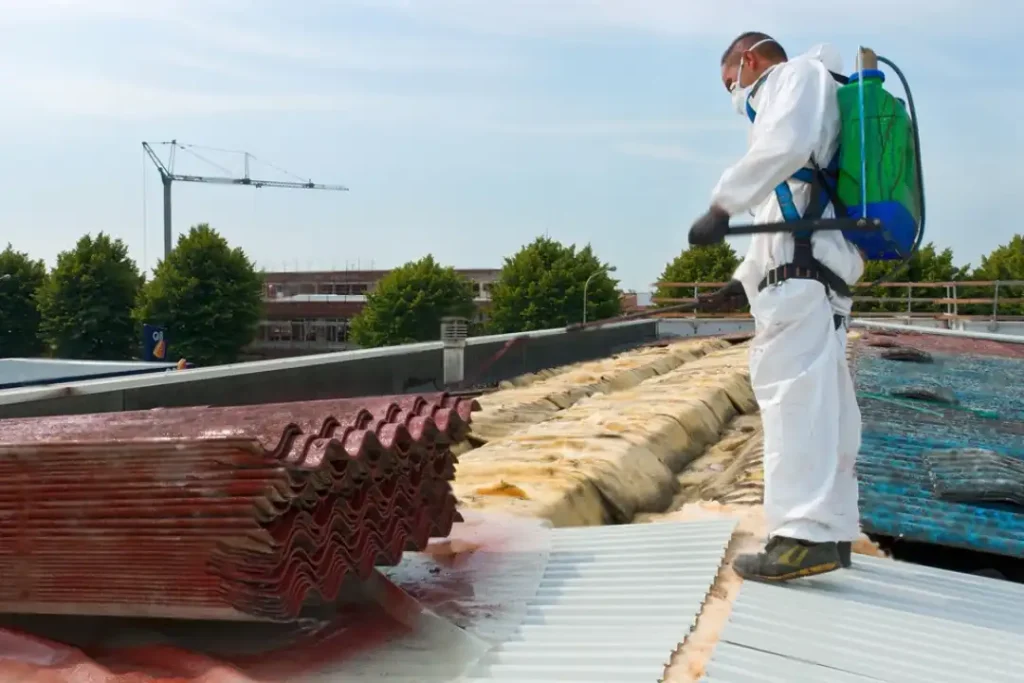
For internal work, the room is isolated so fibres remain contained and the rest of the property stays clean. For external removal, we establish exclusion zones and protect the ground beneath the work area.
Controlled Sheet Removal
The cladding sheets are wetted and removed intact wherever possible. They are unscrewed and carefully prised away rather than smashed, while fixings are handled in a controlled manner.
Waste Disposal
The asbestos waste is double-wrapped, clearly labelled, transported securely and taken to a facility legally authorised to receive asbestos waste.
Clearance Inspection
On request, we arrange a clearance inspection and certificate before the wall is re-lined or re-clad, providing documented confirmation that the removal area has been cleared.
Asbestos cladding removal across Greater Dandenong
We remove asbestos wall sheeting, external cladding and eaves across Dandenong and the surrounding south-east, including Springvale, Noble Park, Keysborough, Dandenong South, Dandenong North, Doveton, Hallam and Endeavour Hills — where fibro-clad homes from the 1960s and 70s are still widespread.
Get a FREE Asbestos Cladding Removal Quote from US
Found asbestos, or think you might have? Send us a photo or book an on-site assessment. We’ll confirm what it is, whether it legally needs a licensed removalist, and give you a fixed price to remove it safely.
FAQ
Is the sheeting behind my bathroom tiles asbestos?
In a pre-1990 home, it may be — particularly if it’s a smooth patterned board called Tilux, common in bathrooms of that era. You can’t tell for certain by eye; a NATA-accredited lab test confirms it. Test before you start any bathroom renovation that disturbs the wall.
Is my external fibro cladding dangerous?
While it’s intact and undisturbed, generally no. The danger comes when it’s cut, drilled, sanded or broken — which is what happens during a re-clad or renovation. That’s when a licensed removalist is needed.
How much does asbestos cladding removal cost in Dandenong?
External cladding is typically $45–$75/m²; a whole-house internal job around $3,000–$6,000; single bathrooms from around $950–$1,500. Height, access and whether it’s tiled over all affect the price. We give a fixed on-site quote.
Can I remove one bathroom wall myself?
Only if it’s under 10m² and under an hour of work — a single small wall might qualify, but it must still be done with proper safe-work methods, and Tilux behind tiles is easy to break. Most people are better having it tested and removed properly, especially mid-renovation.
Do I need a clearance certificate?
It’s not always mandatory, but it’s worth having — it confirms the area is safe before you re-line or re-clad the wall, and it’s useful documentation for a future sale. We can arrange one on completion.